

GET TO KNOW OUR STANDARD
At the Aid by Trade Foundation (AbTF), regenerative agriculture is a practice, not a promise – rooted in respect for all life above and below ground and actively practiced daily by the farming communities who sustain it.

We consequently understand regenerative agriculture to be expressed in actively creating co-benefits in interaction across nature, people, animals, and the economy. Our goal is to improve agricultural systems, raising them to a better state than they are currently in. We created the Regenerative Cotton Standard® (RCS) to make this possible. Based on responsible management, it forms a foundation for community-driven regenerative agriculture to flourish. It is a central element of the Regenerative Cotton Standard® (RCS) to combine suitable traditional knowledge and farming approaches with new scientific insights as well as available state-of-the-art digital technology.
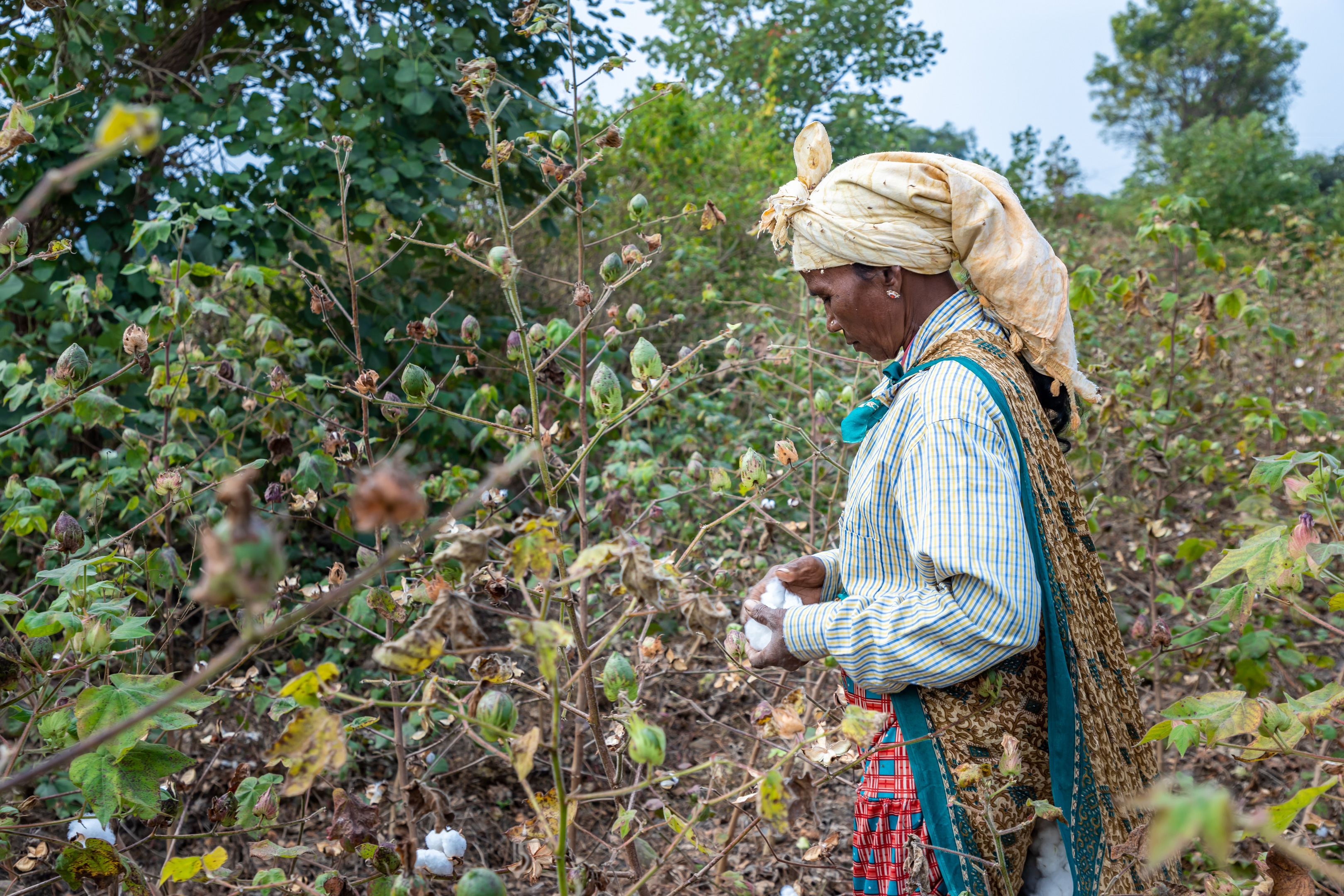
Scope of the Regenerative Cotton Standard®
RCS focusses not only on all farmland on which cotton could be grown as part of a crop rotation but also on working animals on the farms.
At an administrative level, each RCS unit encompasses a managing entity and the RCS-associated farmers it supports. The managing entity could be a cotton company or another organisation directly involved in the cotton supply chain. It bears a high level of responsibility to involve, organise, and train RCS-associated farmers and to create the preconditions for enabling a transformation towards regenerative farming.
The Ten Principles of RCS
RCS consists of ten principles. Each principle contains several criteria, and each criterion is backed up with verifiable indicators. The standard makes it easy for managing entities to navigate the requirements and to assess their performance.

Farm resilience improved
Empowerment of farmers against increasing instability in climate and ecosystems with help of diversification, resource efficiency, and knowledge on regenerative farming practices
1
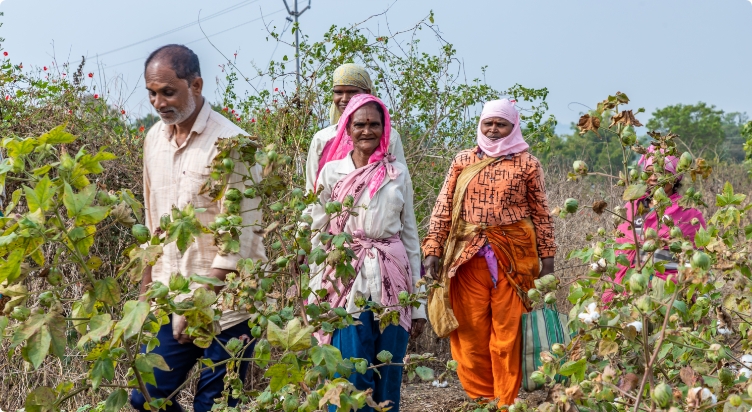
Farming families’ livelihoods are improved
Support in increasing productivity and income stability, as well as food security
2

Transparency and fairness
In co-operation between managing entities and farmers, but also towards the standard owner and 3rd party verifiers
3

Decent working conditions
Decent working conditions relations between managing entities and associated farmers are in compliance with ILO core labour standards
4

Soil health is restored
As the core of regenerative agriculture soil health is the most essential prerequisite for the long-term productivity and resilience of agricultural soils
5

Water resources are preserved
Promotion of efficient use and management of rainwater resources, protection of water resources from chemical or organic sources of pollution, and support of community projects to restore eroded waterways
6
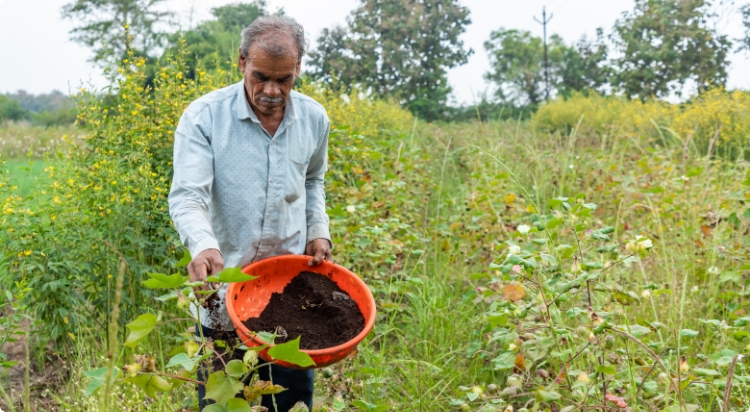
Climate is protected
Avoiding greenhouse gas emissions and even removing carbon from the atmosphere by sequestration in soils and plants
7

Reduction and safe use of synthetic inputs
By promoting exclusion of pesticides that are hazardous, only safe and necessary application and a replacement strategy from the managing entity to ensure a healthy and balanced environment
8

Biodiversity enhanced
Actions for preserving and enhancing biodiversity within the circle of influence of the managing entity and RCS-associated farmers
9

Animal needs respected
With basic rules to benefit the welfare of working animals and animals as a food resource
10
Assurance
The managing entity is the point of contact for both AbTF and the RCS-associated farmers. The managing entity annually assesses its own and its farmers’ performance against mandatory and optional RCS indicators. Continuous improvement is expected, with a focus on the managing entities (ME)’ own farmer-led regeneration strategy.
The regeneration strategy is developed together with farmer representatives through a priority-setting process, which also includes documenting other information as a baseline for the project. The consensus-based regeneration plan resulting from this process provides guidance for the managing entity and for RCS-associated farmers. During the years of implementation, the strategy may evolve further, and independent verification bodies perform regular checks to assess how the standard is being implemented. They also verify whether and to what extent the managing entity and RCS-associated farmers meet the standard’s criteria. Upon passing verification, the managing entity receives a Regenerative Cotton Standard® certificate, which enables it to market its cotton accordingly. Please find details on the chain of custody here.
Downloads
For more detailed information regarding the standard and beyond, please take a look at the documents below.